


The Ancient Greek Origin of Why Athens Is Actually Plural
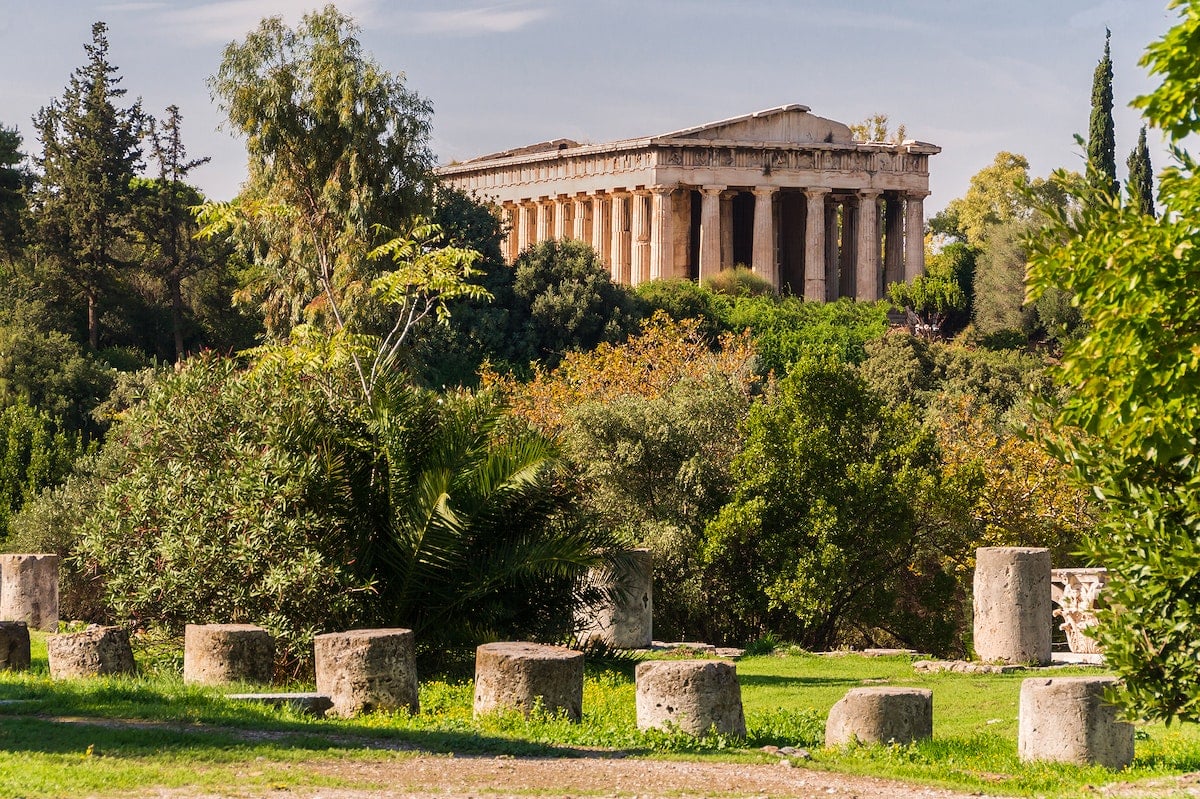
A funny thing about Athens that only geography, history, and linguistic buffs would notice is that its very name holds a clue to its origins.
Most of us think of Athens as a single, sprawling, and wonderfully chaotic city with one long, continuous story. But the word Athens is plural. It isn’t Athen, as it is in German. There’s that small -s at the end, and it’s not just in English. The plural form appears in ancient languages too. This subtle detail hides in plain sight, reminding us that the city we know today once began as a collection of small communities scattered across the hills of Attica.
The name of Athens in Ancient Greek
In Ancient Greek, the city’s name was written as “Athenai” (Ἀθῆναι), which literally means “the Athenses.” While that obviously sounds odd in English, it made perfect sense at the time. Before Athens became the intellectual and political heart of Greece, Attica was a patchwork of small villages.
According to myth, the hero Theseus united these settlements under a single rule—a process the Greeks called synoecism, meaning “living together.” The plural name endured, reflecting not one city but a community of many.
Athens wasn’t unique in this regard. Thebes (Θῆβαι) and Mycenae (Μυκῆναι) followed the same linguistic pattern. Yet Athens outlasted and outshone them all. When the Romans adopted the name “Athenae,” the plural form traveled with it—slipping into most European languages and remaining that way.

From “the Athenses” to Athens
That old plural form is a kind of linguistic fossil, preserved in languages such as English, French (Athènes), Spanish (Atenas), and Italian (Atene). It reveals an ancient time when Athens was more of a neighborhood network than a single capital. Of course, as the centuries rolled on, those villages blended into one great city destined to become a powerhouse of democracy, art, and philosophy. The name didn’t change, but the meaning quietly did.
Modern Greek eventually caught up. By the 1800s, when Greece became independent and began reshaping its identity between its Eastern Roman past and its Ancient Greek ancestors, people began saying “Athina” instead—the singular form. It fit the times, as modern Athens was now a united capital that needed a name to match. Besides, it simply sounded more natural in the evolving rhythm of Modern Greek.
What makes it even more interesting is that “Athina” happens to sound like “Athena,” the city’s own goddess—the same Athena, who according to legend, won the city’s favor with the gift of an olive tree, symbolizing wisdom, peace, and all the other things that Athens gave its pious residents. Thus, even as the grammar changed, the spirit of the name came full circle. Athens and Athena were bound together again, singular and inseparable.
Language has a remarkable way of preserving echoes of the past. It holds on to old meanings long after the stories behind them have faded. The plural “Athens” that English, French, Spanish, and Italian still use is not an error but a trace of memory—a faint echo of the small communities Theseus once united.
Business Wire



No comments