


Storm “Byron” Eases but Flood Risk Persists Across Greece
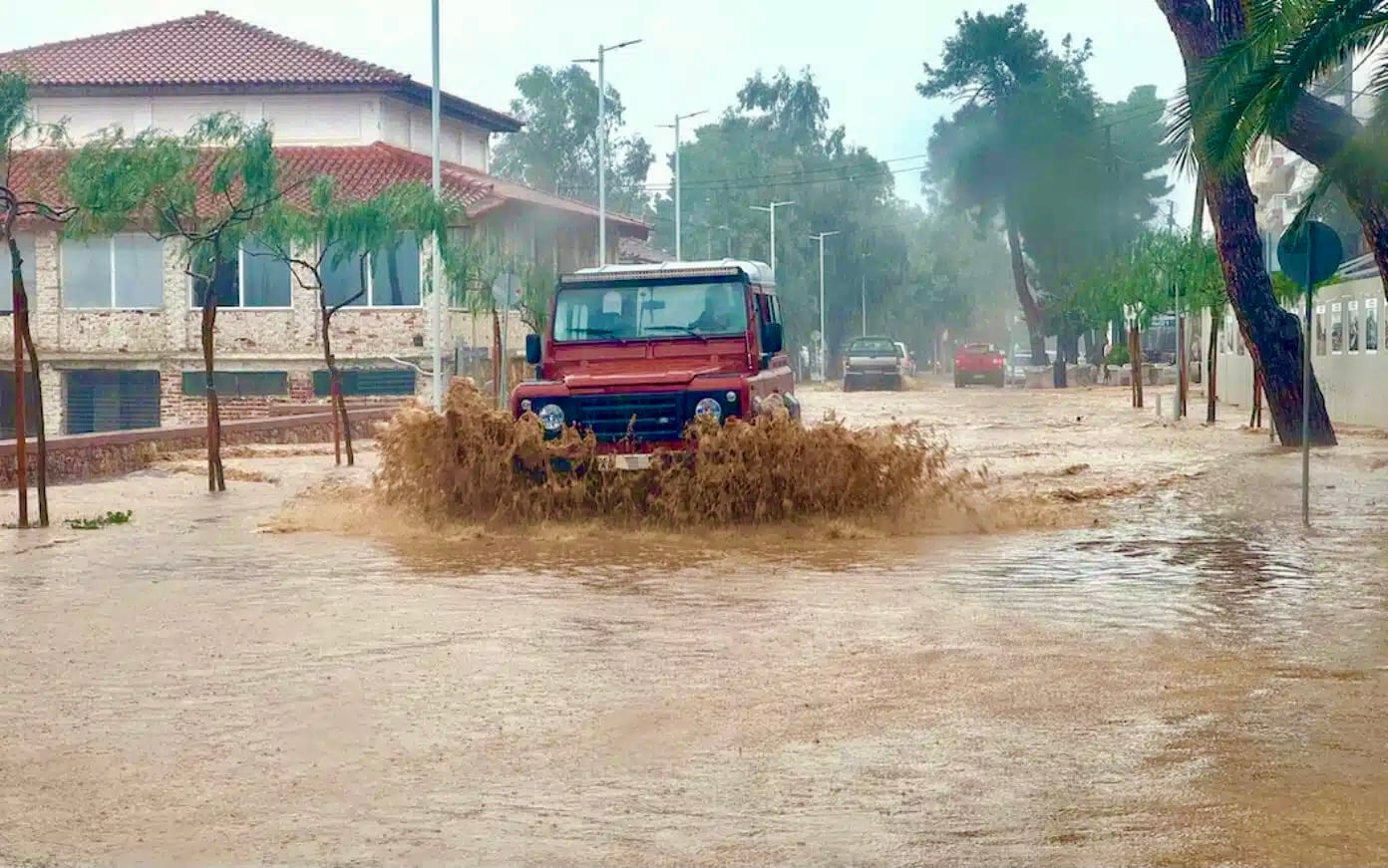
Storm “Byron” is slowly losing strength this Saturday, December 6, but the aftermath is still being felt across Greece, with flooding and civil protection alerts continuing in parts of Thessaly and the eastern Aegean.
The heaviest rain and thunderstorms are now focused mainly on parts of Central Macedonia in the early hours and on the Dodecanese through around midday, while the rest of the country is seeing more moderate weather phenomena in comparison to the last two days.
Greece’s Thessaly on high alert
In the wider Larissa area in central Greece, the main worry on Saturday morning has been the Enipeas river, which overflowed and triggered an overnight 112 emergency alert telling residents of the village of Yperia to move towards the town of Farsala as a precaution, while people in nearby communities such as Lefki, Orfana, Ampelonas, Fyllo and Ilia also received messages to stay on high alert and follow any instructions from authorities.
After days of heavy rain, the Pinios river system is under close surveillance as well. Pinios is Thessaly’s largest river and one of the most important rivers in Greece. In the Trikala regional unit, the river has already overflowed into its wider bed near Valomandri, with regional officials stressing that although the situation is being monitored very closely, it is not currently judged to pose an immediate threat to nearby settlements.
In Larissa city and other low‑lying districts near the Pinios, civil protection services remain on standby, as additional inflows from tributaries such as the Enipeas could push water levels back up even as the rainfall gradually eases.
Other areas affected today
Regions in Greece that were hit hard over the past 48 hours by the weather front Byron, including Attica and parts of central and southern Greece, are now mainly dealing with the consequences rather than the peak of the storm.
Standing floodwaters, fallen trees, damaged infrastructure and local road closures, all on ground that is already saturated and vulnerable to any new downpours.
On the islands, areas such as Rhodes and parts of the Ionian and Aegean that saw severe flooding and major disruption to transport earlier this week, continue to report problems, especially on secondary roads and low‑lying coastal zones where water and debris have been slow to recede.
With landslide risk and water ponding on highways that were already affected on Friday, drivers are being urged to check the latest traffic information, avoid known trouble spots if heavy showers return, and treat any flooded roadway as potentially dangerous, while ferry routes that were heavily disrupted yesterday are running with fewer issues today but still require passengers to monitor announcements in case strong winds or storms in the Dodecanese force last‑minute changes.
What’s the forecast for the weekend in Greece
According to the latest updated special bulletin from the National Meteorological Service (EMY), Storm “Byron” will continue to influence Greece until roughly Saturday midday, but its strongest weather phenomena are steadily weakening and becoming more limited in extent, with heavy rain and thunderstorms now expected mainly in parts of Central Macedonia (especially Pieria, Imathia, Pella and Chalkidiki) early in the morning and in the Dodecanese island group from Samos southwards until around noon.
For the rest of the country, EMY forecasts rain and scattered thunderstorms over the northern mainland, the eastern Aegean, the Cyclades, Crete and the Dodecanese. These will be locally intense in the early hours, while other regions will see mostly cloudy weather with passing showers and a few isolated storms along western coasts, with snow possible on the higher mountains of the north. Winds are generally north‑westerly at 3–5 Beaufort in western Greece and southerly to south‑easterly at 4–6 Beaufort in the east, gradually easing through the day, and temperatures are expected to stay close to seasonal averages.
Related: Severe Weather Front “Byron” Batters Greece, Causing Widespread Disruption
Business Wire



No comments