


Engineering Marvels of Greece: The Stone Arch Bridges of Epirus
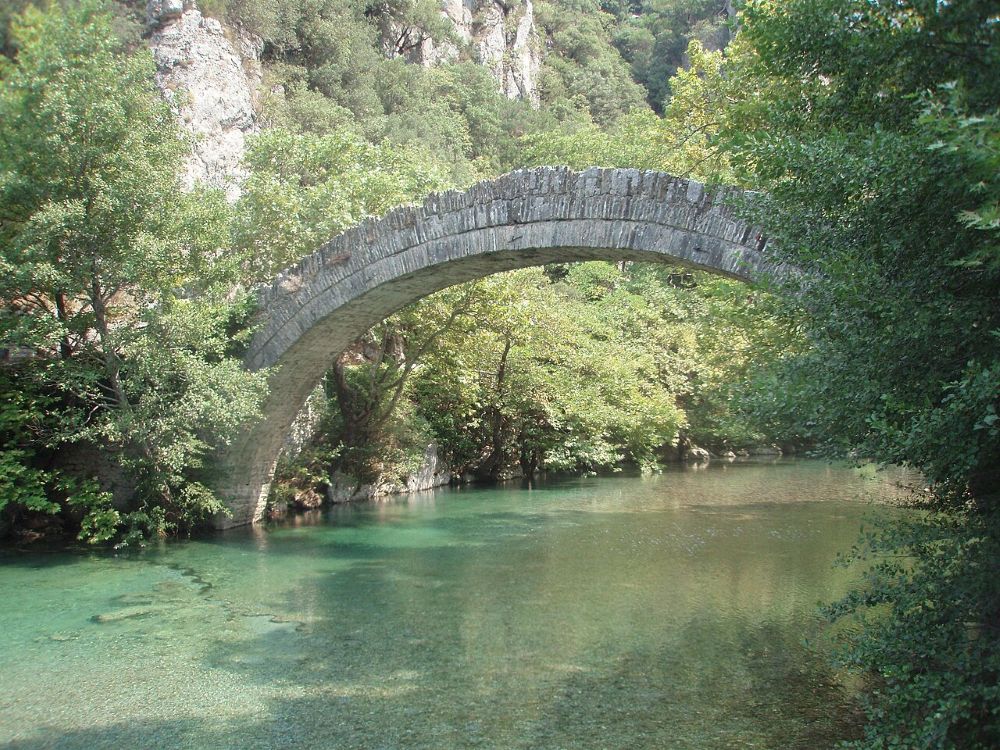
Traveling deep into the river gorges of Epirus in northwestern Greece, you will likely stumble across massive stone bridges spanning the water. These may simply appear to be old bridges, but they are also the signature mark of the Boulouki.
The Boulouki were secretive, highly skilled bands of traveling builders who usually hailed from a handful of remote villages, such as Pyrsogianni and Vourmpiani in the heart of Epirus. They rarely saw their hometowns, as they were almost always on the road, walking the length and breadth of the Ottoman Empire in search of work.
Along the way, they built structures that still leave modern engineers in awe. They had no heavy machinery at their disposal. Instead, they relied entirely on local limestone, unusual organic mortar, and an extraordinary intuitive grasp of physics that can truly be appreciated only by exceptionally experienced engineers.
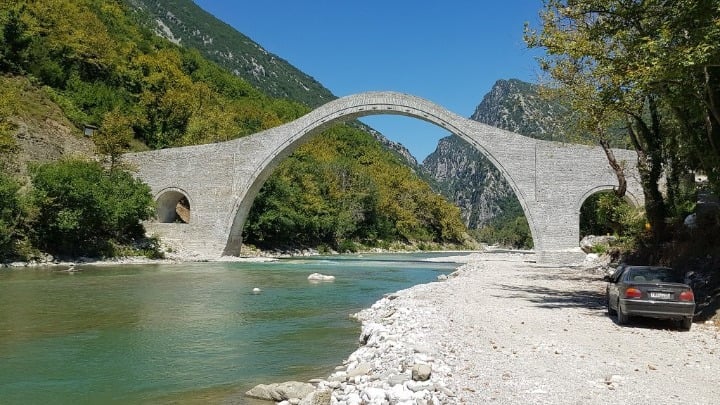
But how did a group of mountain villagers from Epirus in Greece manage all this construction of bridges? In many ways, the Boulouki operated much like a modern mobile corporation. Everyone had a clearly defined role and a guaranteed share of the pay, from the newest apprentice to the head mason. Yet because they were constantly working around Ottoman officials, rival builders, and curious locals, they needed a way to discuss their work safely.
Their solution was Koudaritika (Κουδαρίτικα), a completely invented private language. This was not merely a quirky pastime but rather an essential layer of security for both their personal and professional lives. If they needed to discuss a tricky foundation issue or negotiate pricing, they could do so directly in front of the client without revealing their meaning. Moreover, keeping their trade secrets hidden behind a linguistic barrier ensured their monopoly on the most desirable building contracts throughout the 18th and 19th centuries. For these Greek-speaking builders, remaining discreet and maintaining solidarity was just as important for navigating life within a complex empire as it was for turning a profit.
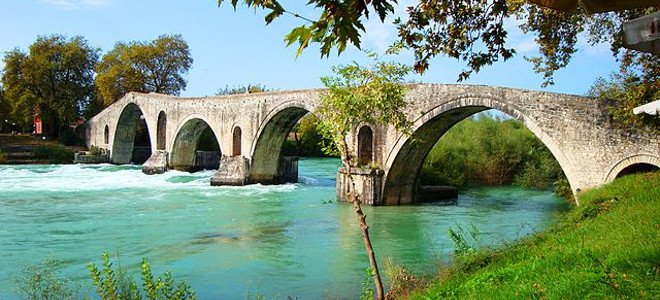
How these bridges of Epirus were built
Constructing one of those iconic stone arches was not something learned from a textbook. It was knowledge passed down entirely by word of mouth, making its way from one generation of builders to the next. The head builder, known as the protomaster, would not simply arrive and begin digging. Instead, he would spend weeks walking along a riverbank before laying a single stone. His task was to identify the exact location where the bedrock would withstand the immense weight of a multi-arched bridge without giving way.
The materials used to construct the bridges of Epirus were unconventional as well. Builders mixed crushed tiles with lime and then added natural binders such as animal hair or egg whites. At first glance, it may sound like a strange kitchen experiment, but, in practice, this organic mortar proved remarkably resilient. It allowed structures to absorb the shocks of earthquakes and endure powerful flash floods. The final result was striking: bridges that do not appear forced onto the landscape but instead seem to rise naturally from the surrounding rock, allowing local people to cross safely and efficiently.
The Boulouki engineers are long gone, yet their stonework tells a larger story about the migration of Greeks within the Ottoman Empire and the endurance of their national identity. These men were true nomads, embodying the rugged character of their mountain homelands and embedding it in the architecture of the wider Mediterranean. At the same time, they remained deeply connected to mainland Greece. Today, they are largely anonymous tradesmen of the past, remembered mainly through their work—craftsmen who cared deeply about doing the job well and shaping their homeland into something both beautiful and functional.
Business Wire



No comments