


Rare Deep-Sea Blanket Octopus Spotted off Greek Island of Evia
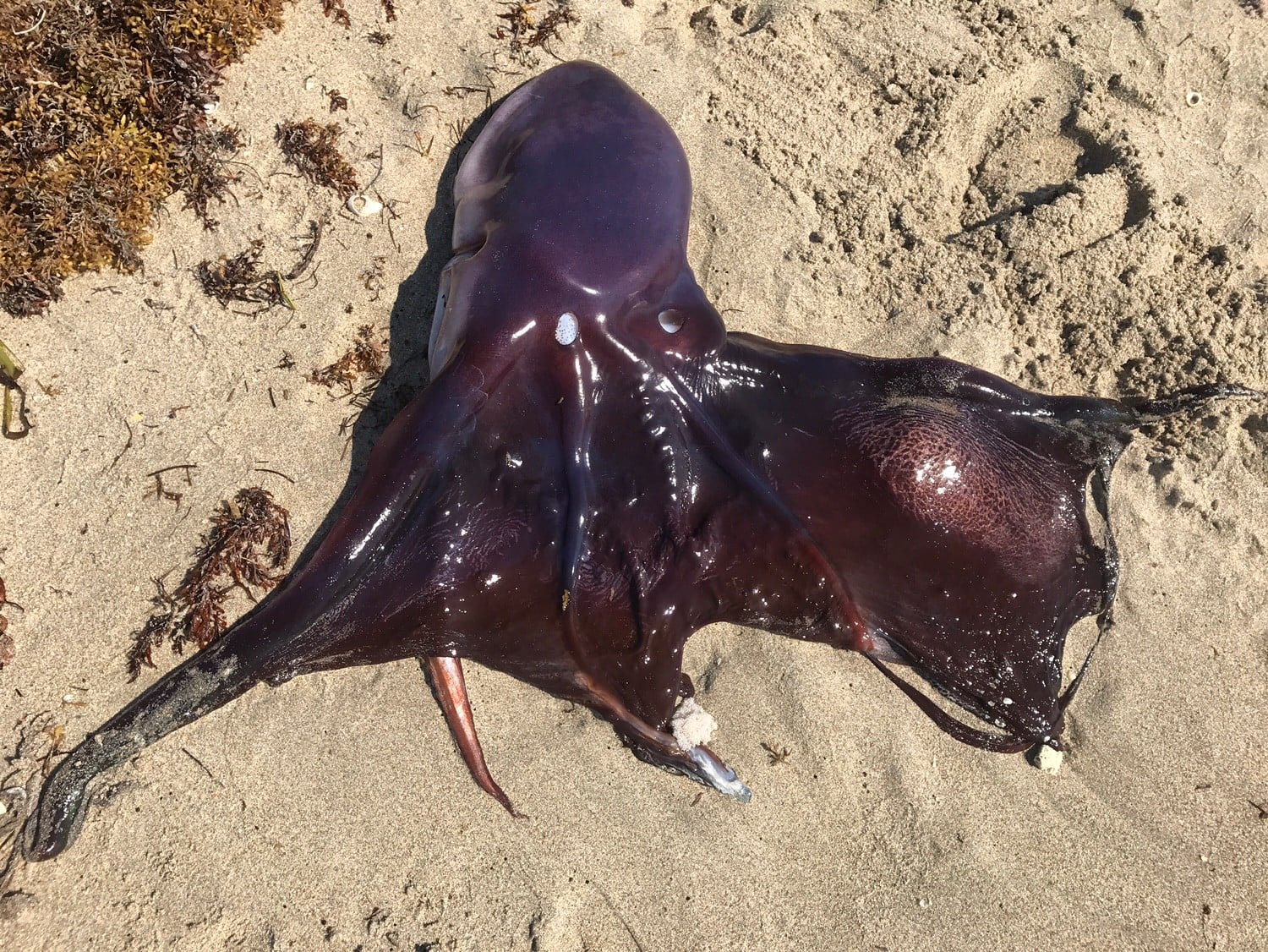
The unusual cephalopod moved only a short distance from the shoreline, astonishing people who had gathered by the sea. Several visitors photographed the animal as it glided through the shallow water close enough to be seen clearly from the beach.
The species belongs to the genus Tremoctopus. Its most recognizable feature is the thin, flowing webbing that connects parts of its arms. When spread underwater, this tissue resembles a billowing cape, creating the dramatic appearance that gives the animal its name.
Rare blanket octopus seen off Evia, Greece
The appearance attracted attention because blanket octopuses usually live far from coastal shallows. In Greece, swimmers are far more likely to encounter the common octopus, which hides among rocks or moves along the seabed.
By contrast, Tremoctopus spends much of its life in the open sea. That makes such a close encounter unusual, especially in water shallow enough for people on the shore to capture clear images.
Photos from Almyropotamos Beach showed the creature’s long arms, unusual shape, and distinctive webbed structure. The moment offered a glimpse of a marine species that seldom comes so close to land.
The striking features of the rare octopus
The blanket octopus ranks among the most striking cephalopods in the sea. Females are especially impressive because they carry large, transparent webbing between the dorsal arms. This feature can expand dramatically underwater, making the animal appear much larger.
The species also stands out for the extreme size difference between females and males. Adult females can grow many times larger, while males remain tiny by comparison. This contrast represents one of the most remarkable examples of sexual dimorphism in the marine world.
Marine researchers describe Tremoctopus as difficult to study because confirmed encounters remain limited. In the Mediterranean, records often involve female specimens found near shore, stranded, or caught accidentally, adding scientific interest to coastal appearances like the one reported in Evia.
Business Wire



No comments